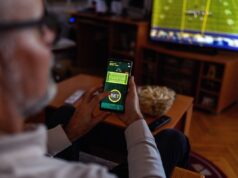

The final minutes used to belong to the scoreboard; now they belong to the market. When a game turns late, the experience is no longer passive viewing. You are watching prices move, options close and reopen and decisions compress into seconds.
There was a time when placing a bet meant committing before kick-off and living with the outcome. That separation has gone. Now the decision sits inside the match itself, updating with every touch, every foul, every moment that changes the direction of play.
What replaces it is something faster and less forgiving. A match does not drift toward a finish line; it keeps presenting new entry points. You are not waiting for a result. You are reacting to it as it forms.
The moment a match stops being predictable
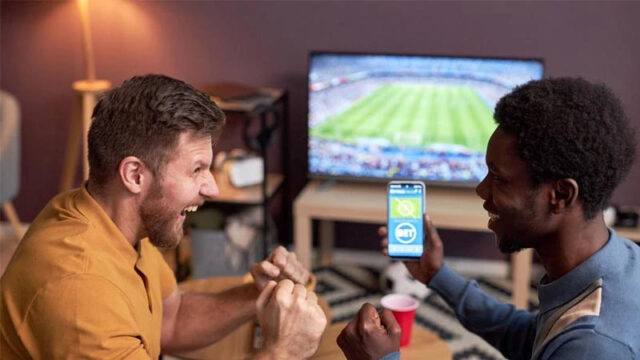
Late in a game, patterns break down. Fatigue shows, defensive structure loosens and small moments carry disproportionate weight. A single turnover can lead to a goal. A set piece becomes more dangerous. What looked settled ten minutes earlier begins to move again.
In betting terms, that is where certainty disappears. Pre-match logic still exists, but it competes with something more immediate. Markets that looked stable begin to move; prices tighten, drift or vanish altogether. The match isn’t being read over the full duration anymore. It’s being read over the next action.
What is actually happening behind the screen
That experience is not random. It is built on constant data flow: live feeds, suspended markets, recalculated prices and rapid re-entry once the event settles.
Every major operator works within that structure, where odds are paused the moment something significant happens and then reopened once the situation is clear.
The betway app functions within that system rather than outside it, acting as the point where those constant updates become visible and actionable. In practice, that means working with the same cycle of suspension and recalculation used across the wider market.
Betway itself is a long-established international bookmaker operating across multiple regulated markets, and its mobile platform brings together sports betting, in-play markets and casino games in a format built for continuous use.
What defines the experience is how interruption is handled. During a shot, a foul or a goal, markets are suspended. For a brief moment, you cannot act.
When they return, the price is different. That cycle of pause and re-entry is visible every time you open the betway app during a live match, where the sequence is clear if you watch closely.
When one goal rewrites the entire market
Late goals are not rare disruptions anymore; they are part of the structure of modern football. In Zambia’s 1–1 draw with Mali at the Africa Cup of Nations in December 2025, Patson Daka scored in stoppage time to level the match. One moment, one finish and the entire betting picture changed instantly.
Before that goal, a result market may have been leaning heavily toward Mali. Draw prices were drifting, win probabilities narrowing. Once the ball crossed the line, everything reset. Match result, next goal, draw no bet; all of it recalculated within seconds.
In practical terms, that is the kind of situation where a user on the betway app sees options disappear and then reappear with altered prices.
That is the core of live betting. It is not about predicting the game from the start. It is about understanding how quickly a single action can collapse one line of thinking and replace it with another.
Stoppage time is now part of the betting window

There is a reason those moments feel so intense. They happen more often than many expect. According to Premier League data, 94 goals were scored in stoppage time during the 2024 to 2025 season; that is 8.4 percent of all goals.
Those are not marginal events. They are built into the game. Teams continue to push, referees add more time and matches stay open longer. Liverpool provide a clear example. In the 2025 to 2026 season, seven of their first twenty-seven league games were decided by goals after the 90th minute.
From a betting perspective, that removes any clean sense of closure. The idea that a match is “nearly done” at 85 minutes no longer carries the same weight.
Nine goals and no stable odds
If you want to see how extreme it can get, look at Paris Saint-Germain’s 5–4 win over Bayern Munich in April 2026. A record-breaking nine goals in a Champions League semi-final first leg is not just a spectacle; it is a stress test for live markets.
Totals move constantly. Over and under lines adjust with each goal. Both teams to score settles early and then becomes irrelevant. Next goal markets open and close repeatedly.
Cash-out values move with every attack at the Parc des Princes.
There is no stable reference point. You are not tracking one outcome; you are tracking a sequence of events that refuses to settle into any recognizable trend.
In that environment, the betway app functions less like a tool and more like a live feed of changing probabilities, where each action on the pitch is reflected in what you see on screen.
The app does not create the pressure; it delivers it
It is easy to assume that mobile platforms create urgency. In reality, they expose it. The pressure already exists in the game. A late corner, a defensive error, a counterattack in stoppage time; those moments have always carried jeopardy.
What changes is how quickly you are asked to respond. There is no delay between seeing something unfold and being offered a price on it. The distance between observation and action has collapsed.
That is where design matters. Layout, speed, visibility of markets; all of it shapes how easily you move from watching to acting. The platform is not neutral. It presents choices in a way that feels immediate.
Why access changes behavior more than odds
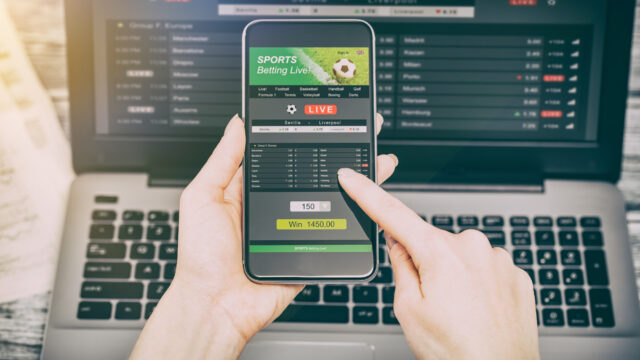
The most important change is not in pricing. It is in behavior. When betting moves onto a phone, it becomes continuous. There is no natural break between placing a bet and watching the outcome. The two merge.
That changes how you think. Pre-match betting rewards patience and planning. Live betting leans more toward reaction. You see a chance, a pattern or a moment of pressure and respond to it. Decisions happen quickly, often within seconds, which brings the focus onto what is unfolding in real time.
Of course, that also means staying aware of how you approach those moments. Keeping control of timing and stake size remains important, even when everything is moving quickly, and is part of engaging with the experience in a measured way.
You can see similar themes across broader platform design, particularly in mobile-first environments built around immediacy rather than delay.
The same principle appears across tech environments where access is constant and decisions happen closer to the moment itself, influencing how people respond in real time across different digital spaces.
The final minutes are no longer quiet
The closing stages of a match used to be about confirmation. A team saw out a result. The clock ran down. The outcome became official.
Now those minutes feel open. The scoreline can change, the market can move and the experience of watching becomes tied to the possibility of one more action. Not guaranteed, but always present.
That is what live betting feels like when the game turns late. It is not just about odds or platforms. It is about time compressing, decisions tightening and the sense that nothing is fully settled until the final whistle is actually blown.